

What Was Actually Proposed
On August 12, Mayor Jacob Frey unveiled a $2.3 billion budget for 2027. It includes an 11.3% increase to the city property tax levy. For the owner of a median-value Minneapolis home, currently $351,400, that works out to about $409 more per year, or $34 a month.
That would be the largest levy increase in Minneapolis in at least 26 years.
The city says it is closing more than $60 million in budget pressures. That figure combines roughly $33 million needed to fully fund existing services with more than $30 million in additional departmental cost pressures. Reporting on the underlying General Fund gap has put it closer to $30 to $33 million. Both numbers get quoted, so do not be confused when you see them side by side.
To get the levy down to 11.3%, the mayor cut over $20 million in spending, eliminated roughly 100 positions, and consolidated departments. Without those moves, he says the increase would have topped 19%.
For comparison, St. Paul's mayor proposed a 6.8% levy increase the following day, which works out to about $58 for the median St. Paul home.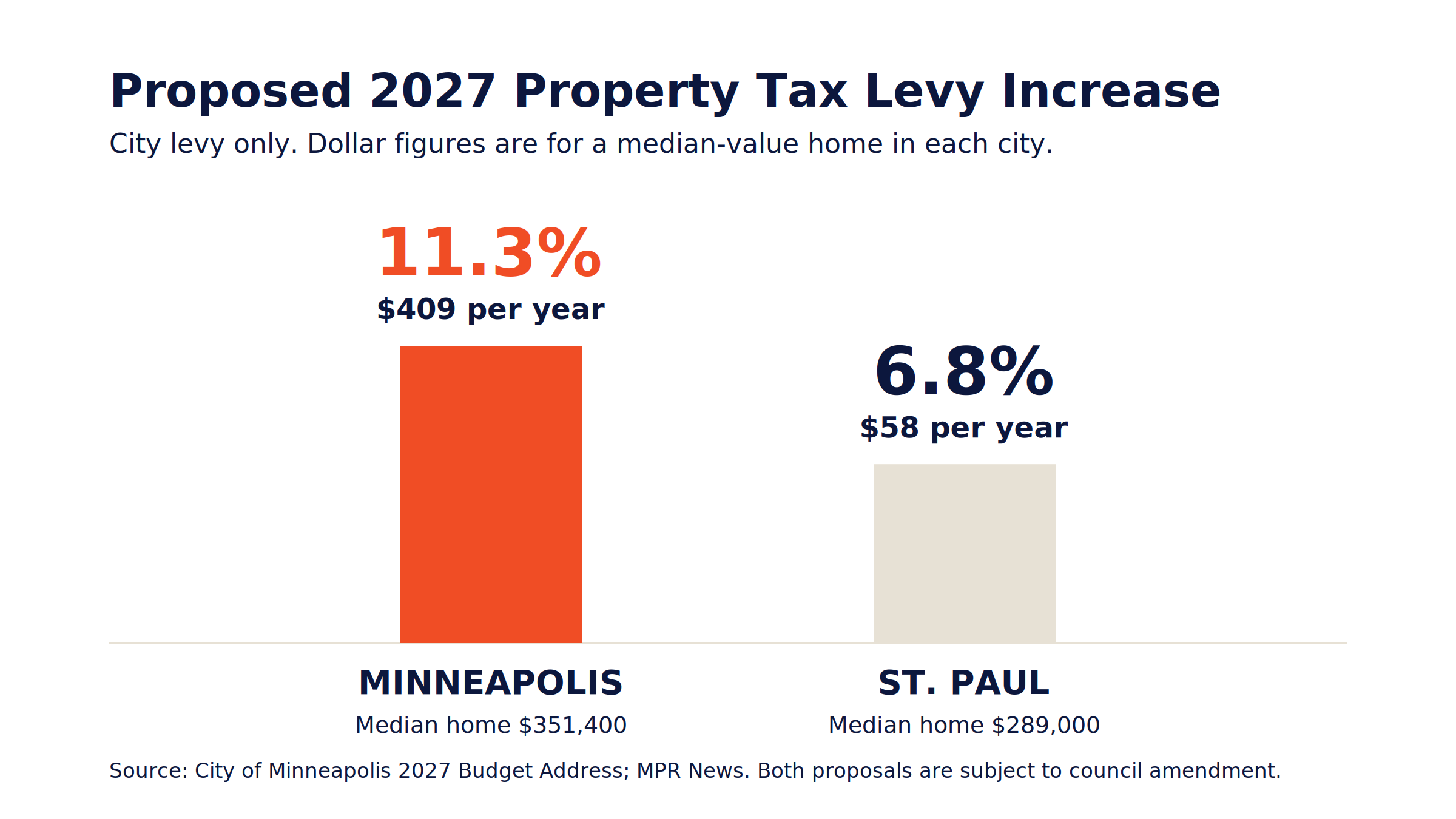
Why This Is Happening, and It Starts Downtown
Here is the piece most people miss.
Property taxes are not a rate you pay on your home in isolation. The city sets a total dollar amount it needs to collect. That amount gets divided among every property in Minneapolis based on assessed value and property type. When one group of properties loses value, the rest of us cover the difference.
Downtown commercial real estate has been losing value for five straight years. Office building values across the city are down roughly 20%. Downtown commercial values dropped 13.7% in the most recent assessment and have lost close to 35% of their value since 2022, when remote work started hollowing out office demand.
Commercial property is taxed at roughly twice the rate of residential. So when office towers get reassessed downward, their tax bill shrinks and yours grows to fill the gap.
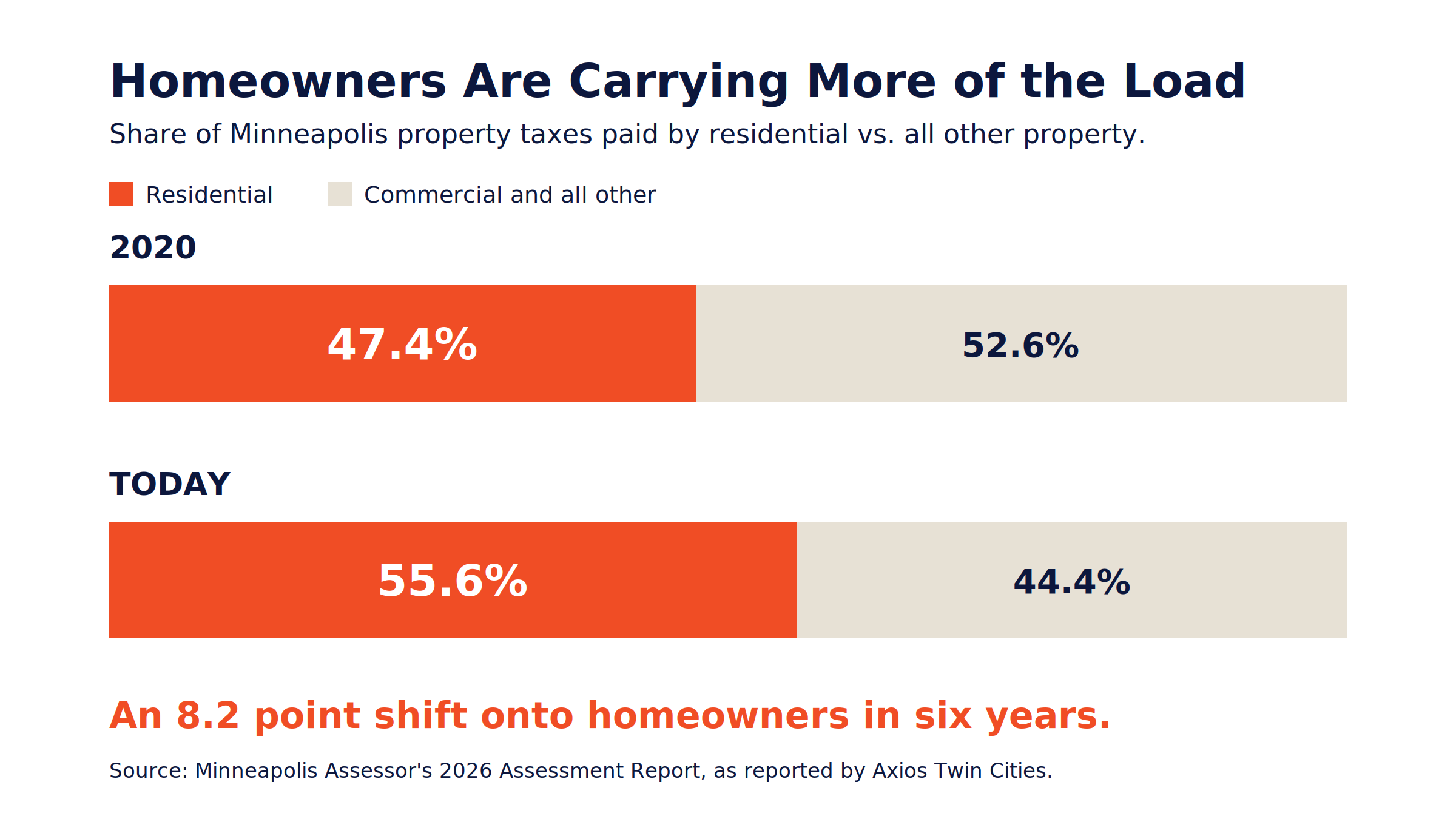
So yes, the levy is going up. But part of your bill is going up because downtown is worth less than it used to be.
The Honest Math on Your Bill
That $409 number is going to mislead a lot of people, so let me walk it through slowly.
First: you are not writing one property tax check. You are writing four.
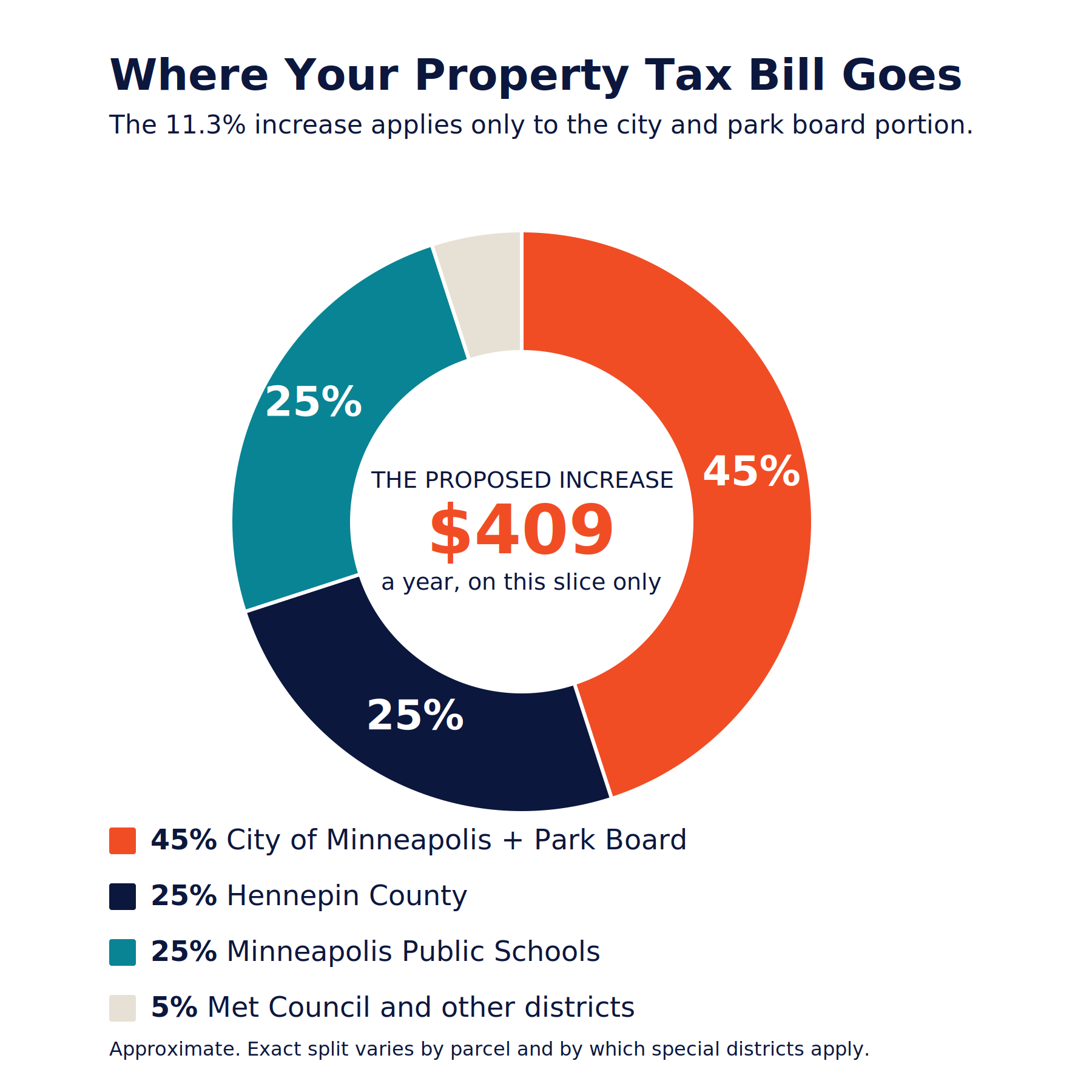
Your annual bill splits roughly like this:
- About 45% to the City of Minneapolis and the Park Board
- About 25% to Hennepin County
- About 25% to Minneapolis Public Schools
- About 5% to the Met Council and other districts
The 11.3% increase and the $409 apply to the first piece only. The county, the school board, and the rest set their own levies on their own schedules. So read that headline as "$409 from one of the four," not "$409 total."
Second: the levy percentage is not your percentage.
Here is the part almost nobody explains. The city does not set a tax rate and apply it to your home. It decides the total dollars it needs to collect, $606 million under this proposal, and then divides that bill across every property in Minneapolis based on assessed value and property type.
Picture the city's tax bill as one pizza that has to get eaten every year. Downtown office towers used to eat a large share of it. Their values collapsed, so their share shrank. The pizza did not get any smaller. Everyone else's slice got bigger.
That is how your bill can go up in a year your home's value went down.
Here is what that looked like in real life. In 2025 the city approved a levy increase of 6.9%. If the levy percentage were your percentage, every homeowner would have seen about 6.9% on the city portion of their bill.
That is not what happened. Looking at the city and Park Board portion only, so it is a fair apples-to-apples comparison:
- Median home in Ward 4 (north Minneapolis): up 15.7%
- Median home in Ward 13 (southwest): up 14.7%
- Median home in Wards 2 and 10, where more values fell: up 7.3%
Same levy, three very different bills. The gap is the shift doing its work, moving burden between neighborhoods and between property types.
And if you own a condo downtown, your unit is residential, not commercial. You are on the side of the shift that picks up burden, not the side that sheds it. A soft downtown office market does not mean a soft tax bill for you. Often it means the opposite.
None of This Is Final Yet
The mayor's proposal is a starting point, not a decision. The City Council has changed his levy number before.
The Budget Committee, which is all 13 council members, is reviewing it now. Council President Elliott Payne has said he is not sure the balance between job cuts and a double-digit levy is right. Budget Committee Chair Aisha Chughtai has been pointed about police overtime spending. Expect the final number to move.
Dates That Actually Matter
- September 9
Board of Estimate and Taxation public hearing on the maximum 2027 levy, 5:05 p.m. - September 23
BET votes to set the maximum levy. This is the ceiling. After this date the number can come down, but it cannot go up. If you want to influence the top end, September is your window, not December. - November
Truth in Taxation notices hit your mailbox with the proposed number for your specific parcel. - December 15
Truth in Taxation public hearing, followed by the City Council's final adoption vote.
One more thing to watch. The Park Board asked for a 5.86% levy increase and the mayor's proposal gives it 2.5%. The board says that could cost up to 26 jobs. Parks are part of that 45% slice of your bill, so this fight affects your number too.
What You Can Actually Do About It
Nobody enjoys writing a bigger check. But people also want their streets plowed and their potholes filled. Both things are true.
Here is how I would think about it depending on where you sit.

If you are staying put
Budget the increase and move on. Then check whether you qualify for Minnesota's Homestead Credit Refund. A lot of Minneapolis homeowners are eligible and never file for it. If your assessed value looks wrong compared to what similar units in your building actually sold for, you have the right to appeal. I can pull the comparable sales for you.
If you are thinking about right-sizing
This is the conversation I am having most often right now. A smaller home or a condo in a different price band carries a lower tax base, lower utilities, and less maintenance. If your kids are gone and you are heating and taxing square footage you no longer use, the math on moving has changed. I will run the actual numbers with you, current bill versus projected bill, before you decide anything.
If you are thinking about renting it out
Some owners are better off holding the asset and letting a tenant carry the cost. We manage properties across downtown and the surrounding neighborhoods, and I can tell you honestly whether your unit rents for enough to make that work. Sometimes it does not. I will tell you either way.
If you are buying
Do not just look at the listed tax figure on a property. Ask what the assessed value is doing and how it compares to recent sales in the building. That number is going to matter more over the next few years than it has in the past.
Let's Look at Your Actual Numbers
I have been selling condos, lofts, and townhomes in Minneapolis for a long time, and I have watched this downtown shift happen in real time. I would rather help you make an informed decision than watch you react to a headline.
If you want to know what this means for your specific property, call me.

Sources: City of Minneapolis 2027 Recommended Budget Address and budget calendar; Minnesota Star Tribune coverage of the 2027 budget proposal; Minneapolis Assessor's 2026 Assessment Report as reported by Axios Twin Cities; MPR News on the Minneapolis and St. Paul budget proposals; Minneapolis Times ward-level property tax analysis; Minneapolis Park and Recreation Board 2027-28 budget materials.
Posted by Joe M. Grunnet on
Leave A Comment